
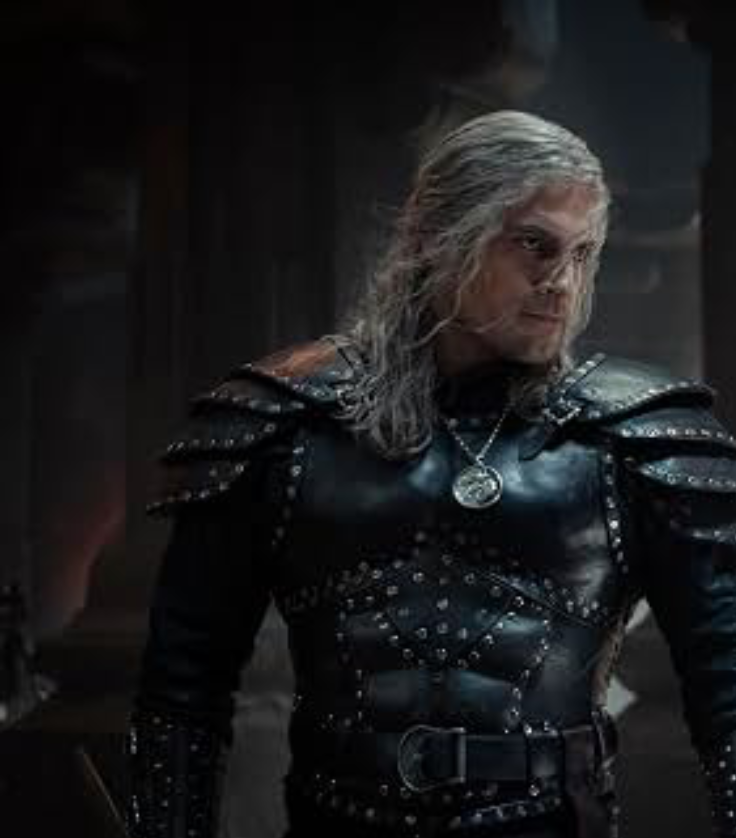
Henry Cavill in The Witcher became one of the most celebrated fantasy casting choices of the modern television era. From his first appearance as Geralt of Rivia in 2019 to his final season in 2023, Cavill brought the legendary monster hunter to life with a combination of physical intensity, dry humor, quiet emotion, and unmistakable screen presence.
For fans discovering The Witcher today, Henry Cavill’s time as Geralt remains an essential part of the show’s history. His portrayal helped introduce a new generation of viewers to the world created by Polish author Andrzej Sapkowski, while also giving longtime fans a live-action version of Geralt that many had eagerly anticipated.
But what made Henry Cavill such a memorable Witcher?
Let’s explore his journey.
Who Did Henry Cavill Play in The Witcher?
Henry Cavill played Geralt of Rivia, the central character of Netflix’s The Witcher during its first three seasons.
Geralt is a mutated monster hunter known as a Witcher. He travels across the Continent taking contracts to hunt monsters and supernatural creatures, usually in exchange for payment.
Although Geralt initially appears to be a cold and solitary warrior, his story reveals a much more complicated character. Beneath his reserved personality is someone deeply protective of the people he loves.
Netflix describes Geralt as a monster hunter for hire who journeys through a dangerous world where humans can sometimes be more wicked than the creatures he hunts.
When Did Henry Cavill Join The Witcher?
Netflix announced Henry Cavill as Geralt of Rivia in September 2018, more than a year before the series premiered.
At the time, Cavill was already known for major roles including Superman and August Walker in Mission: Impossible – Fallout. Netflix announced that he would lead The Witcher saga as Geralt, alongside Anya Chalotra as Yennefer and Freya Allan as Ciri.
The casting immediately generated enormous interest among fans of the books and video games.
Cavill’s physical appearance was particularly suited to the character, but his enthusiasm for the source material became an equally important part of his connection with Witcher fans.
Why Was Henry Cavill Perfect as Geralt?
One reason Henry Cavill’s Witcher performance connected so strongly with audiences was his ability to communicate emotion without relying heavily on dialogue.
Geralt is famously reserved. He doesn’t always explain what he is thinking, meaning the actor has to communicate through facial expressions, body language, movement, and tone.
Cavill leaned heavily into that style.
His Geralt could appear intimidating one moment and surprisingly vulnerable the next.
He also brought a physical commitment to the character that made Geralt’s monster hunts and sword fights feel intense and believable.
Netflix’s Season 3 coverage noted that Cavill performed three different fight scenes in a single day during production, illustrating the physical demands of the role.
Henry Cavill as Geralt in Season 1
Season 1 introduced viewers to Geralt and the dangerous world of the Continent.
The season follows several characters and storylines that eventually begin to intersect, particularly Geralt, Yennefer, and Princess Ciri.
Geralt’s reputation as a monster hunter is established early, but Season 1 also begins revealing the man behind the reputation.
His relationship with destiny becomes especially important after his encounter with Ciri.
Netflix’s official Season 1 material describes the series as a story of fate and family, with Geralt, Yennefer, and Ciri ultimately being drawn toward one another.
For many viewers, Season 1 established the version of Geralt that would become closely associated with Cavill: the white-haired monster hunter with two swords, a dry sense of humor, and an unexpectedly compassionate heart.
Henry Cavill as Geralt in Season 2
Season 2 expanded Geralt’s relationship with Ciri.
Instead of simply being a lone monster hunter, Geralt increasingly becomes a protector and father figure.
His responsibility toward Ciri gives the character a new emotional dimension.
Netflix’s Season 2 character guide describes Geralt as someone who has spent decades hunting monsters but possesses a strict personal code and deep devotion to the people he cares about.
This development is important because it moves Geralt beyond the traditional image of the emotionless warrior.
Cavill’s performance allowed viewers to see the character’s affection and vulnerability beneath his hardened exterior.
Henry Cavill’s Witcher Training and Physical Transformation
Playing Geralt required considerably more than simply wearing a white wig and carrying a sword.
Cavill’s performance involved extensive physical preparation, demanding fight choreography, and the development of Geralt’s distinctive movement and combat style.
The character needed to look like someone who had spent his entire life hunting monsters.
That meant strength, agility, endurance, swordsmanship, and controlled movement all had to work together.
The result was a Geralt who felt physically capable without losing the character’s personality.
Henry Cavill and Geralt’s Sword Fighting
Sword fighting became one of the defining visual elements of Cavill’s performance.
Geralt is not simply a strong fighter. He is a highly trained professional whose movements are fast, calculated, and efficient.
Cavill’s fight scenes became some of the most recognizable moments from his time on the show.
His commitment to the action was particularly appreciated by fans who were already familiar with Geralt through the books and video games.
Rather than treating the character as a generic fantasy warrior, Cavill approached Geralt as a specialist whose fighting style reflected years of training and experience.
Geralt, Yennefer and Ciri
One of the strongest aspects of Henry Cavill’s Witcher journey is Geralt’s relationship with Yennefer and Ciri.
Together, the three gradually develop into an unconventional family.
Geralt’s relationship with Ciri becomes increasingly important as the story progresses.
By Season 3, protecting Ciri is no longer simply about destiny. Geralt has developed a genuine emotional attachment to her.
Netflix’s Season 3 coverage describes Geralt as increasingly devoted to protecting his found family, with Ciri’s safety changing his entire perspective.
This transformation gives Cavill’s performance some of its most emotional moments.
Henry Cavill’s Final Season as Geralt
Season 3 marked Henry Cavill’s final appearance as Geralt of Rivia.
Netflix’s official coverage described Season 3 as Cavill’s final season on the series.
The season places Geralt, Ciri, and Yennefer in increasingly dangerous circumstances as political conflict, magical forces, and enemies threaten to tear their family apart.
For Cavill, the season represented the conclusion of his version of Geralt.
The final episodes therefore carry an additional significance for fans who had followed his interpretation since 2019.
Why Did Henry Cavill Leave The Witcher?
Henry Cavill’s departure became one of the biggest topics of discussion surrounding The Witcher.
After Season 3, the role of Geralt was recast, with Liam Hemsworth taking over the character for Season 4.
Netflix’s current official The Witcher page lists Hemsworth as Geralt, while Cavill’s run covers the first three seasons.
It is important to distinguish confirmed information from online speculation. Fans have discussed many possible explanations for Cavill’s departure over the years, but a fan site should avoid presenting unverified claims as established fact.
What is certain is that Season 3 was Cavill’s final season as Geralt, and the role subsequently continued with Liam Hemsworth.
Henry Cavill’s Lasting Impact on The Witcher
Even after Cavill’s departure, his version of Geralt remains an important part of The Witcher’s identity.
His portrayal helped make Geralt recognizable to a huge international television audience and introduced the character to viewers who had never read the books or played the games.
For many fans, Cavill became inseparable from the image of the White Wolf.
His Geralt was:
- Quiet but powerful
- Sarcastic but compassionate
- Dangerous but protective
- Independent but deeply loyal
- Emotionally guarded but capable of profound love
That combination helped make his interpretation memorable.